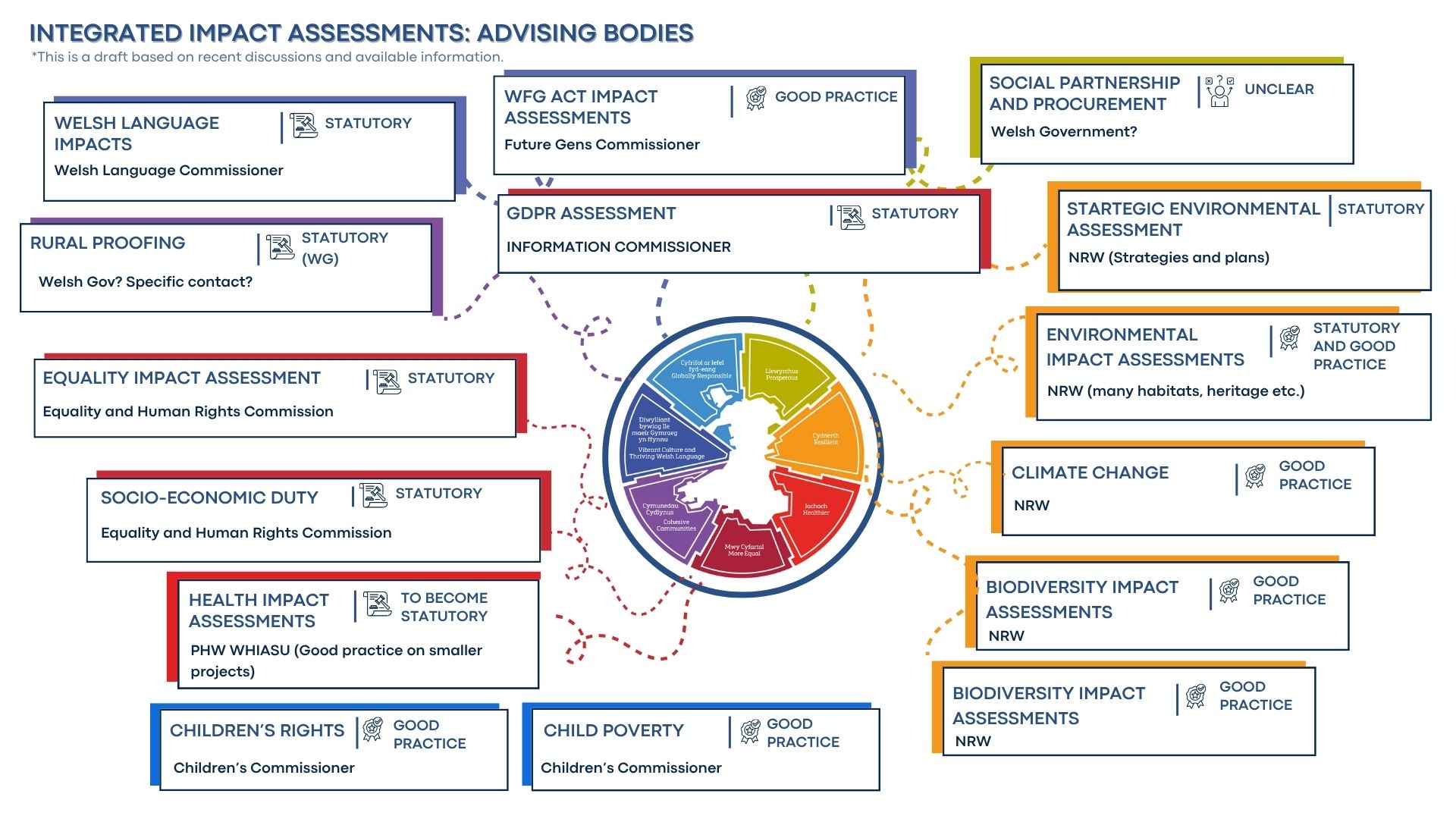
As they are proportionate, they ensure we spend the right amount of time gathering data, involving communities and colleagues in the impact conversation.
IIAs and IAs are in fact resource saving by avoiding: waste of precious resources, legal bills, harm to individuals or communities and nature, unnecessary reparation or treatment costs and reputation shattering legal cases.
They are also useful tools within organisation to provide: assurances of compliance and of good practice; evidence and data; they provide internal checks and scrutiny. They also offer precious opportunities to upskill teams to apprehend more holistically the more and more complex world we navigate.
Impact assessments complement each other as we all share the same environment and population in Wales. The integration of impact assessments help ensure inclusion is the aim by default in our policies, projects and environments. They reveal intersectionality and cumulative impacts so we can better protect our most vulnerable ecosystems and communities.
We hear that sometimes economic impacts are prevailing, this is why we need to ensure economic, social, environmental and cultural impacts matter equally. Different impact assessments have been created, and some imposed, to help maximise benefits for specific groups or the environment against disproportionate impacts and priorities. The Well-being of Future Generations Act provides a natural umbrella as it demands the pursuit of the 4 equal dimensions of well-being: the economy, our society, the environment and our culture.